Next-Generation Industrial Parks: From Eco-Industrial Parks to Sustainable Production Ecosystems
Industrial parks (IPs) of the future may no longer be simply places where factories and production infrastructure are concentrated. Increasing requirements for the circular economy, resource efficiency, clean energy, carbon management, data, and climate resilience are calling for a new approach to industrial park development in Viet Nam.
At the Vietnam Industrial Real Estate Forum 2026, Dr. Nguyen Tram Anh, National Project Manager of the Global Eco-Industrial Parks Programme (GEIPP) in Viet Nam under the United Nations Industrial Development Organization (UNIDO), noted that industrial park development is expanding from traditional industrial parks and eco-industrial parks towards a broader concept – next-generation industrial parks, which can be viewed as production ecosystems.
Not just “greener” – but a different way of operating
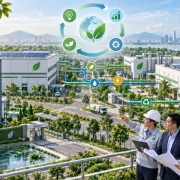
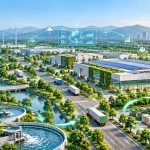
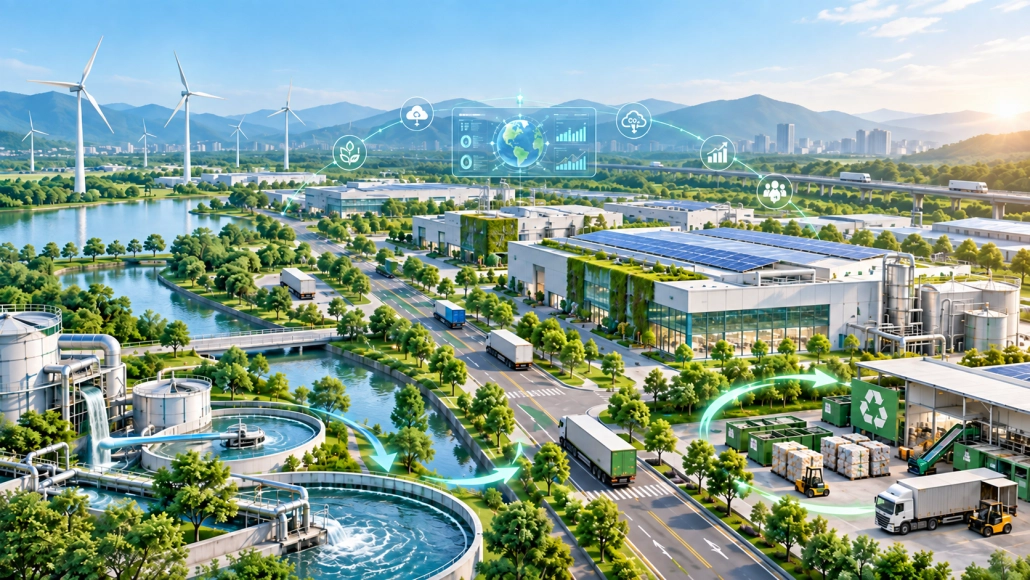
According to the approach shared by UNIDO, next-generation industrial parks should integrate production activities with the principles of the circular economy, resource efficiency and cleaner production, while also strengthening resilience to external impacts.
Innovation, big data, artificial intelligence, and digital-based management are also playing an increasingly important role. Therefore, the transition is not simply about adding environmental solutions, but about changing the way industrial parks are planned, operated, and provide services to enterprises.
Next-generation industrial parks should integrate production activities with the principles of the circular economy, resource efficiency and cleaner production, while also strengthening resilience to external impacts.
Key components highlighted include renewable energy and the quality of energy supply; infrastructure for industrial symbiosis and water circularity; carbon management and data sharing; and logistics infrastructure. Importantly, these elements should be considered from the planning stage rather than added only after an industrial park has already become operational.
Eco-industrial parks provide a foundation for the next stage of transition
Viet Nam has spent more than a decade promoting the eco-industrial park model. According to information shared by UNIDO, since 2014, the programme has supported 10 industrial parks and around 160 enterprises, with more than 1,200 solutions implemented. These solutions have delivered tangible results in energy and water savings, emissions reductions, and investment efficiency: approximately 200,000 MWh of electricity and nearly 1 million m³ of water are saved annually, while more than 340,000 tonnes of CO₂ emissions are reduced. In financial terms, more than USD 42 million has been invested, generating annual savings of nearly USD 10 million.
More importantly, the way industrial parks are perceived is also changing. Rather than primarily providing land and infrastructure, industrial park developers are increasingly expected to organize an ecosystem of services and production in which enterprises can use resources more efficiently, share infrastructure, promote industrial symbiosis, and jointly reduce emissions.
This also marks a shift from optimizing individual factories to optimizing resources at the industrial park level.
Technology alone is not enough for scaling up
The legal framework for eco-industrial parks in Viet Nam has gradually been established and improved. However, practical implementation continues to highlight the need for clearer regulations and technical standards related to recycling and the use of waste and scrap materials in industrial symbiosis, while also reducing overlapping administrative procedures.
In addition, incentives related to taxation, land lease terms, and preferential credit have been identified as factors that could provide greater motivation for industrial park developers and enterprises to participate in the transition.
Another equally important factor is domestic technical capacity. As the eco-industrial park model is scaled up, industrial park developers, enterprises, and service providers need to progressively strengthen their capacity to assess, develop, and implement solutions independently, thereby gradually reducing reliance on international technical assistance.
From resource efficiency to industrial park competitiveness
More broadly, the emerging requirements for next-generation industrial parks show that resource efficiency and sustainable development are becoming increasingly linked to the competitiveness of industrial parks.
An industrial park with a stable and appropriate energy supply, water circularity, data systems for carbon management, infrastructure supporting industrial symbiosis, and suitable services will be better positioned to meet the requirements of industries and investors that are increasingly focused on resource efficiency, emissions, and sustainability.
Drawing on its experience in Resource Efficient and Cleaner Production (RECP), industrial symbiosis, and supporting the transition to eco-industrial parks, VNCPC recognizes that the transition needs to begin with data and the practical needs of enterprises, but cannot stop at the factory level. Solutions need to be connected with infrastructure, governance mechanisms, and coordination among stakeholders at the industrial park level.
Moving from a resource-saving solution at an individual enterprise to a circular, digitalized, and low-emission production ecosystem is a long-term process. Cooperation among enterprises, industrial park infrastructure developers, government authorities, technical organizations, and development partners will be one of the key foundations for gradually developing and scaling up new industrial park models in Viet Nam.
VNCPC
References:
UNIDO expert: Scaling up eco-industrial parks requires improved policies and incentive mechanisms