Where is ESG present in your business?
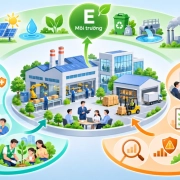
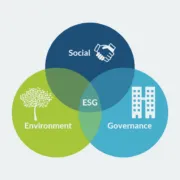
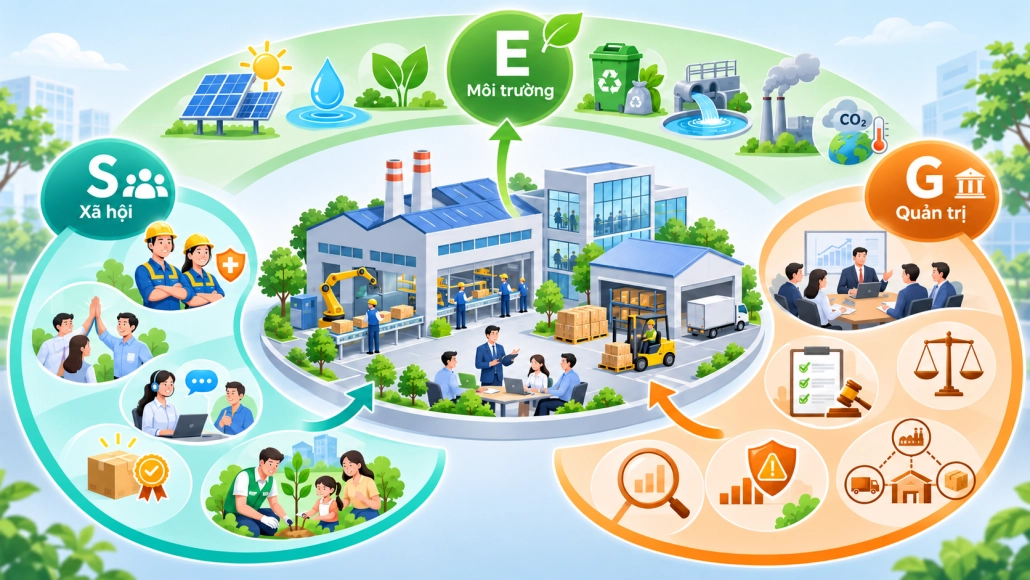
ESG may still be a relatively new term for many businesses, but issues related to the environment, people, and governance have long been part of business operations. From the use of energy, water, and raw materials to employee management, customer relations, supplier selection, and business decision-making, Environmental (E), Social (S), and Governance (G) factors can all be identified in a company’s everyday activities.
So how can businesses systematically identify ESG factors in a way that reflects the specific characteristics of their operations?
1. Identifying ESG starts with understanding business operations
Every business has its own business model, operational processes, and stakeholders. For manufacturing companies, key issues may include raw material use, energy consumption, waste management, and occupational safety. Meanwhile, service companies may focus on service quality, customer rights, employee working conditions, or data protection.
What these activities have in common is that they may generate positive or negative impacts on the environment and people, while also creating risks or opportunities for the business.
Therefore, identifying ESG factors is not simply about listing activities and classifying them under E, S, or G. Businesses need to consider relevant environmental, social, and governance issues, potentially affected stakeholders, resulting impacts, and associated risks and opportunities.
This provides a basis for determining ESG issues relevant to the specific characteristics of each business.
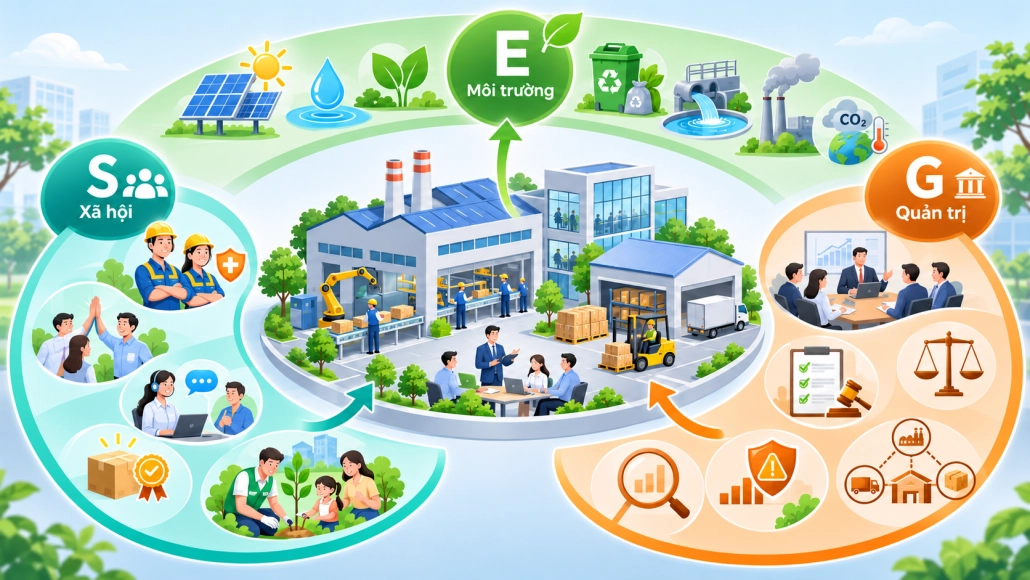
Identifying ESG factors is not simply about listing activities and classifying them under E, S, or G.
2. Identifying ESG factors across the three pillars
E: How does your business use resources and impact the environment?
The Environmental (E) pillar relates to resource use and the environmental impacts of business operations.
Depending on the sector, businesses may consume energy, water, and raw materials while generating solid waste, wastewater, air emissions, or greenhouse gas emissions.
For example, in a factory, machinery operation involves energy consumption, while production processes may generate waste and wastewater. For hotels, environmental issues may include electricity, water, and fuel consumption, as well as waste management. For logistics companies, transportation activities and fuel consumption are important considerations when identifying greenhouse gas emissions.
Based on these activities, businesses can identify groups of environmental issues such as:
- Use of energy, water, and other resources
- Management of solid waste, hazardous waste, and wastewater
- Control of air emissions and sources of pollution
- Greenhouse gas emissions and climate change
- Impacts on land, ecosystems, and biodiversity, where relevant
The identification process should also consider potential impacts beyond the facility’s boundaries, such as those associated with transportation, raw material procurement, and supply chain activities.
S: How do your business activities affect people and society?
The Social (S) pillar concerns the impacts of a business on people, including employees, customers, users of products and services, and communities.
For employees, issues to consider include working conditions, occupational health and safety, wages, benefits, employee rights, and development opportunities.
For customers, social factors may relate to product and service quality and safety, as well as the protection of customer rights and information.
For communities, businesses need to consider how their operations affect the lives, health, and interests of surrounding residents.
In addition, human rights and working conditions within the supply chain should also be considered where relevant.
Thus, businesses can begin identifying Social (S) factors by focusing on three main stakeholder groups: Employees – Customers – Communities, while extending the assessment to other relevant stakeholders depending on their operations and value chains.
G: How does your business organize, manage, and control its operations?
The Governance (G) pillar reflects the systems, mechanisms, and processes through which a business is directed, managed, monitored, and held accountable for its decisions.
Governance issues can be identified through organizational structure, assignment of responsibilities, decision-making processes, internal control mechanisms, and risk management.
In addition, legal compliance, business ethics, anti-corruption, management of conflicts of interest, transparency, and accountability are also important aspects.
For example, in procurement activities, besides price and quality, businesses need to consider transparency in supplier selection, prevention of conflicts of interest, and monitoring of contract implementation.
Therefore, identifying Governance (G) factors can begin with the following questions: Who is responsible? How are decisions made? How does the business comply with legal requirements and manage risks?
3. A single activity may involve multiple ESG factors
In practice, an activity does not necessarily fall exclusively under the E, S, or G pillar.
For example, supplier selection is a common activity in manufacturing, trading, and service businesses. Beyond quality and cost, this activity may involve various ESG issues, as outlined in the table below:
|
Pillar |
Potential issues to identify |
| E – Environmental | Origin of raw materials and environmental impacts of products, packaging, and transportation. |
| S – Social | Working conditions, occupational safety, and employee rights at suppliers. |
| G – Governance | Transparency in supplier selection, legal compliance, and prevention of conflicts of interest. |
The example above demonstrates that ESG identification requires a cross-cutting perspective across business activities, departments, and business relationships.
Therefore, ESG should not be viewed as the responsibility of any single department, but rather as a shared responsibility requiring participation and coordination across the entire organization.
4. Three simple questions to start identifying ESG factors
Businesses do not necessarily need to start with a complex set of criteria. Instead, they can examine each actual business activity and ask three questions:
- How does this activity impact the environment?
Consider resource use, waste generation, wastewater, air emissions, and sources of greenhouse gas emissions.
- How does this activity affect people and society?
Consider positive or negative impacts on employees, customers, communities, and other stakeholders.
- How is this activity governed?
Consider responsibilities, decision-making processes, legal compliance, risk management, transparency, and oversight mechanisms.
By applying these questions to activities ranging from production, supply, business operations, and human resources to management and administration, businesses can initially identify relevant ESG issues, impacts requiring attention, and departments responsible for managing them.
This is the initial identification step, providing a foundation for businesses to further assess the significance of ESG issues and determine which ones should be prioritized.
5. From ESG identification to management and reporting
Identifying ESG factors helps businesses better understand the connections between actual business activities – impacts – risks and opportunities – management responsibilities.
However, identifying ESG issues is only the beginning. To manage ESG effectively, businesses need to further assess the significance of each issue, existing management policies and measures, implementation responsibilities, monitoring data, and achieved results.
To move toward preparing an ESG report under a specific framework, businesses need to further determine material issues, select appropriate indicators, and collect the necessary data and supporting evidence.
So, how far has your business progressed in implementing ESG practices? Join VNCPC in exploring this topic in the next article of our ESG series.
VNCPC