Transitioning to eco-industrial parks: What is RECP?
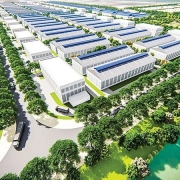
As green transition, circular economy and sustainable development requirements are increasingly becoming inevitable trends, the eco-industrial park (EIP) model is being adopted by many countries to improve resource efficiency, reduce waste and emissions, while enhancing the competitiveness of enterprises.
To promote this transition, the Global Eco-Industrial Parks Programme (GEIPP), initiated by the United Nations Industrial Development Organization (UNIDO), has been implemented in many countries. Following the success of Phase I, GEIPP II continues to be implemented with funding from the State Secretariat for Economic Affairs (SECO), with the aim of advancing the circular economy, reducing the climate impacts of industrial activities, and strengthening the climate resilience of enterprises and industrial parks.
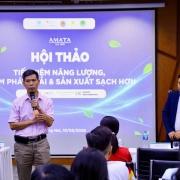
In Viet Nam, the project “Scaling up the eco-industrial parks approach to promote circular economy in Viet Nam” is being implemented by the Ministry of Finance (formerly the Ministry of Planning and Investment) in cooperation with UNIDO. Under the project, industrial parks such as DEEP C and Amata receive consultancy and technical support to facilitate their gradual transition towards the eco-industrial park model.
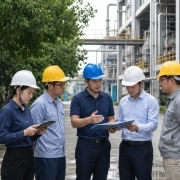
As the consulting organization selected to implement project activities, Vietnam Cleaner Production Centre Co.Ltd. (VNCPC) is responsible for conducting Resource Efficient and Cleaner Production (RECP) assessments, identifying industrial symbiosis opportunities, and organizing training programmes to support enterprises throughout the transition process.
During its work with enterprises, VNCPC experts receive many questions related to RECP, eco-industrial parks, industrial symbiosis, as well as the benefits that enterprises can gain from participating in the project.
Therefore, VNCPC has developed the article series “Transitioning to eco-industrial parks” to share fundamental knowledge and answer common questions from enterprises during their green transition journey.
Question
What is RECP? Why are more and more enterprises choosing to apply it?
Insights from VNCPC Experts
RECP is a preventive approach that helps enterprises use raw materials, energy, water and chemicals more efficiently, while reducing waste and emissions directly at source during the production process.
Unlike solutions that focus only on treating pollution after it has already been generated, RECP aims to prevent waste and losses at source through improvements in production processes, optimization of operations, strengthened management practices, and gradual technology upgrades where necessary.
Applying RECP can bring a wide range of practical benefits to enterprises:
- More efficient use of raw materials, energy and water;
- Reduced production costs and improved operational efficiency;
- Reduced waste, wastewater and greenhouse gas emissions;
- Enhanced competitiveness and better ability to meet market requirements;
- A solid foundation for implementing ESG practices, greenhouse gas inventories, and transitioning towards more sustainable enterprises and eco-industrial parks.
RECP can therefore be considered not only a solution for helping enterprises reduce costs, but also an important first step in their journey towards green transition and sustainable development.
Through many years of working alongside enterprises in RECP programmes, VNCPC has found that improvement opportunities do not necessarily require large investments from the outset. In many cases, simply reviewing production processes, controlling raw material losses, optimizing energy use, or improving management practices can already deliver significant economic and environmental benefits.
This is also why RECP is consistently regarded as an important foundation for developing sustainable enterprises and eco-industrial parks.
Stay tuned for the next article: Transitioning to eco-industrial parks: What can enterprises gain from participating in an RECP assessment?
VNCPC