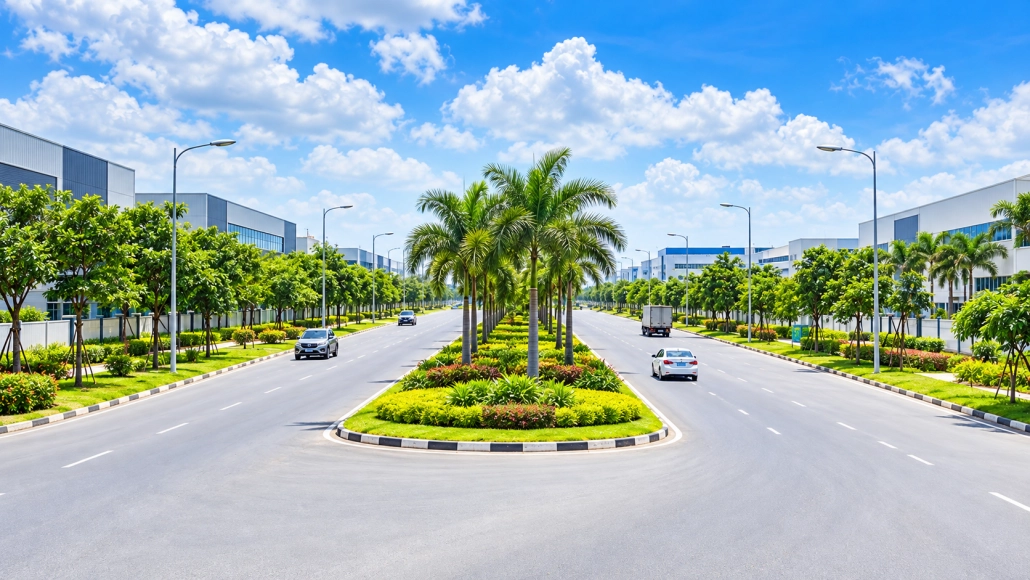
Hanoi develops a plan to transform 8 Industrial Parks into Eco-Industrial Parks
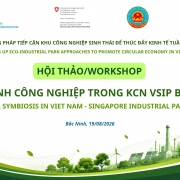
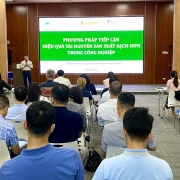
Hanoi is developing a plan to convert existing industrial parks (IPs) into eco-industrial parks (EIPs), aiming to improve resource efficiency, reduce environmental impacts, promote the circular economy, and enhance competitiveness.
Assessing the current status and defining a roadmap for each industrial park
According to information from the Management Board of Hanoi High-Tech Parks and Industrial Parks, the initial study scope covers eight industrial parks: Thang Long, Noi Bai, Sai Dong B, Quang Minh, Thach That – Quoc Oai, Phu Nghia, Nam Thang Long, and Southern Hanoi Supporting Industrial Park – Phase I.
The Plan focuses on assessing infrastructure, technologies, resource use and waste generation; identifying opportunities for industrial symbiosis; determining gaps against eco-industrial park criteria; and proposing an appropriate conversion roadmap.
Surveys, database development and current-status assessments are being carried out from the fourth quarter of 2026. The Plan dossier is expected to be submitted to the Hanoi People’s Committee for consideration in the second quarter of 2027.
Linking park-level transformation with improvements at individual enterprises
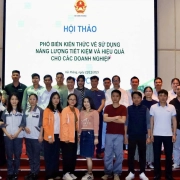
From the perspective of Resource Efficiency and Cleaner Production (RECP), the transition towards eco-industrial parks needs to be linked with specific improvements in the production activities of individual enterprises. In addition to shared infrastructure, efficient use of raw materials, energy and water at enterprise level provides an important foundation for reducing resource consumption and minimizing waste generation.
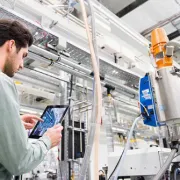
The starting point is to understand where resources are being used, in what quantities, and at which stages losses occur. When production data are systematically collected and analyzed, enterprises can identify improvement opportunities, select appropriate solutions and monitor results after implementation.
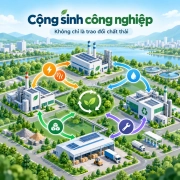
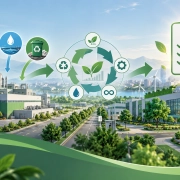
RECP and industrial symbiosis can directly contribute to the transition from conventional industrial parks to eco-industrial parks.
Solutions can begin with operational management, equipment maintenance, leakage control and loss reduction, followed by consideration of options requiring investment, such as technology upgrades, heat recovery or water recycling. The selection of solutions should be based on actual conditions, economic effectiveness and the enterprise’s implementation capacity.
Combining improvements at individual facilities with upgrades to shared infrastructure and services can provide a practical foundation for park-level transformation and deliver measurable results.
Identifying industrial symbiosis opportunities based on actual needs and capabilities
Industrial symbiosis creates opportunities for cooperation among enterprises through the exchange of raw materials, by-products, water and energy, or through the shared use of infrastructure and services. However, identifying a waste stream or by-product does not automatically mean that a feasible industrial symbiosis solution has been established.
Each opportunity needs to be assessed in terms of quality, quantity, supply stability, requirements of the receiving party, transportation distance, additional treatment needs and relevant legal conditions. Economic benefits should also be considered for both the supplier and the user.
For example, the feasibility of water reuse depends on the quality of treated water and the requirements of its subsequent use. For heat recovery and exchange, in addition to the amount of heat available, factors such as temperature level, timing of heat generation, demand for heat use and distance between the parties need to be considered. This approach helps screen initial ideas and develop them into options with a sound basis for further study and implementation.
Data and collaboration provide the foundation for transformation
For effective transformation, infrastructure developers and enterprises need to collaborate in providing data, identifying priority issues and defining support needs. Data should have clear sources, use consistent units and reporting periods, and be regularly updated to support progress assessment.
For enterprises, proactively reviewing resource-use efficiency and preparing relevant data are practical steps towards participating in the transformation process. For infrastructure developers, consolidating the needs and supply capabilities of enterprises can help identify opportunities for cooperation across the entire industrial park.
Hanoi’s development of the Plan provides an opportunity to promote an integrated approach combining industrial park management, infrastructure development and improvements in production activities. RECP and industrial symbiosis can directly contribute to this process through solutions that are suited to actual conditions, deliver verified benefits and can be sustained over the long term.
VNCPC
Source: Management Board of Hanoi High-Tech Parks and Industrial Parks