Thị trường cá tra EU-Phần II: Xu hướng và chính sách thu mua của các nhà bán lẻ hàng đầu
Tiếp theo phần I, phần II của Báo cáo “Tiềm năng thị trường cá tra sản xuất bền vững tại EU” đưa ra phân tích về những xu hướng và chính sách thu mua thủy sản của các nhà bán lẻ hàng đầu tại EU.
Thị trường cá tra EU-Phần II: Xu hướng và chính sách thu mua của các nhà bán lẻ hàng đầu
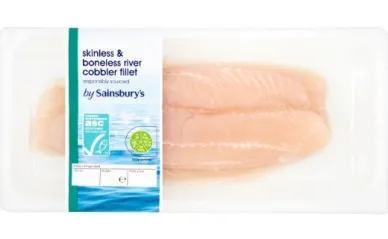
Sản phẩm cá tra đạt chứng nhận ASC bán tại siêu thị Sainsbury (Anh)

Thị trường EU phụ thuộc vào nguồn thủy sản NK để đáp ứng nhu cầu tiêu thụ cá và thủy sản. Năm 2013, khả năng tự cung thủy sản của EU chỉ có thể đáp ứng nhu cầu đủ cho đến ngày 7/7, cho thấy gần một nửa tiêu thụ thủy sản của EU phụ thuộc vào nguồn NK.

Năm 2011, các loài cá NK như cá minh thái Alaska, cá ngừ và cá tra chiếm tới 40,3% tổng lượng tiêu thụ của Đức. Tại Hà Lan, cá ngừ đứng vị trí thứ 2, cá tra đứng vị trí thứ 3 về khối lượng trên thị trường.

Thị trường EU gồm 27 thị trường đơn lẻ với dân số dự kiến tăng thêm 21,3 triệu lên 522,3 triệu người vào năm 2030. Tổ chức Nông lương Liên hợp quốc (FAO) dự đoán tiêu thụ bình quân thủy sản sẽ tăng từ 22 lên 24 kg/người/năm. Do đó, EU vẫn sẽ là thị trường quan trọng cho sản phẩm cá và thủy sản.

Báo cáo của FAO về thị trường cá tra EU

Tháng 6/2013, FAO đưa ra báo cáo thị trường cá tra tại EU. Theo Eurostat, năm 2012, NK cá tra vào thị trường EU đạt 143.200 tấn, trị giá 376 triệu USD, giảm 22% về khối lượng và 24% về giá trị so với năm 2011. Giá trung bình NK giảm 2,4% còn 2,36 USD/kg năm 2012. Các thị trường chính tại EU là Tây Ban Nha, Hà Lan, Ba Lan và Đức đều giảm NK cá tra từ Việt Nam. Ngược lại, một số thị trường vẫn tăng trưởng như Bỉ, Hy Lạp và Latvia.

Tuy nhiên, tình hình vẫn khả quan tại một số thị trường như:

Đức: Dù NK cá tra vào Đức năm 2012 giảm nhưng cá tra vẫn phổ biến đối với người tiêu dùng tại đây. Đây là loài cá được tiêu thụ nhiều thứ 5 tại Đức. Mới đây, cá tra đạt tiêu chuẩn ASC đã có mặt trên thị trường. ASC là chứng nhận công nhận trại nuôi hoạt động có trách nhiệm và thân thiện với môi trường. Các sản phẩm cá tra dán nhãn ASC đầu tiên có xuất xứ từ 13 trại nuôi đạt ASC tại vùng ĐBSCL, chiếm 10% tổng sản lượng cá tra của Việt Nam. Hiện nay, sản phẩm dán nhãn ASC đã có mặt tại nhiều siêu thị trên toàn nước Đức như Topsea, Frosta, Femeg, Queens and Profish.

Pháp: Trong 10 năm gần đây, Tập đoàn Carrefour, nhà bán lẻ lớn thứ 2 thế giới luôn tích cực nâng cao chất lượng sản phẩm thủy sản. Nhận thức được yêu cầu khẩn cấp của toàn cầu trong việc bảo vệ nguồn lợi thủy sản và tương lai của ngành thủy sản, Carrefour đã cam kết đóng góp vào việc tiêu thụ thủy sản bền vững.

Để đạt mục tiêu đề ra, Carrefour xây dựng chuỗi cung cấp thủy sản tươi và đông lạnh gắn liền với các mối quan tâm về môi trường và được chứng nhận đạt các tiêu chuẩn chất lượng khắt khe. Tất cả các sản phẩm cá tra tươi và đông lạnh của tập đoàn này đều có chứng nhận GlobalGAP.

Một trong những điểm chính trong chính sách của Carrefour là bảo đảm sự minh bạch và cung cấp thông tin cho người tiêu dùng. Carrefour chủ động liên kết người tiêu dùng với một trang web dành cho người tiêu dùng thủy sản đạt chứng nhận GlobalGAP. Trang web này là một phần của chiến dịch nâng cao nhận thức của người tiêu dùng của GlobalGAP.

Từ năm 2013, Carrefour in địa chỉ trang web www.mon-poisson.info trực tiếp trên bao gói của tất cả các sản phẩm cá tra đông lạnh bán dưới thương hiệu của Carrefour tại hệ thống siêu thị của tập đoàn tại EU. Trang web về nuôi trồng thủy sản sẽ cung cấp cho khách hàng của Carrefour các thông tin về tiêu chuẩn Thực hành nuôi tốt của GlobalGAL. Người tiêu dùng cũng có thể tra cứu xuất xứ của thủy sản họ ăn thông qua bằng công cụ tra cứu sử dụng bộ mã số 13 con số – số đăng ký GlobalGAP (GGN) – được GlobalGAP cấp riêng cho từng nhà sản xuất đạt chứng nhận và được ghi trên bao bì sản phẩm. Dữ liệu và công cụ tìm kiếm được đăng tải trên trang web của GlobeGAP và  được kết nối với trang web www.mon-poisson.info.

Anh: Sainsbury là nhà bán lẻ lớn đầu tiên tại Anh giới thiệu sản phẩm cá tra đạt chứng nhận ASC (River Cobbler). Đây là một bước tiến trong xu hướng sử dụng nguồn cá thay thế được nuôi có trách nhiệm thay thế cá tuyết và cá haddock trên thị trường.

Cá tra có xuất xứ từ khu vực ĐBSCL, được nuôi thương phẩm từ đầu những năm 2000. Từ năm 2011, Sainsbury đã hợp tác với Hội đồng Nuôi trồng thủy sản (ASC) để đảm bảo cá mua từ Việt Nam đều đạt chứng nhận. Quy trình chứng nhận bao gồm hoạt động đánh giá các tiêu chí toàn diện về môi trường và xã hội do tiêu chuẩn ASC đề ra như: các yêu cầu đảm bảo tính đa dạng sinh học trong khu vực, tác động tới các cộng đồng xung quanh trại nuôi, thức ăn nuôi cá được lấy từ những nguồn cung bền vững và có thể truy xuất.

Theo hệ thống cảnh báo nhanh đối với thực phẩm và thức ăn chăn nuôi của EU (RASFF), cảnh báo đối với cá tra NK từ Việt Nam giảm đáng kể từ 24 trường hợp năm 2010 xuống còn 4 trường hợp năm 2012. Đồng thời số lô bị trả về giảm từ 14 lô xuống còn 2 lô.

Chính sách thu mua

Chính sách thu mua của các nhà bán lẻ hàng đầu EU thường gắn liền với các mục tiêu của các tổ chức phi chính phủ quốc tế; 75% trong số 20 nhà bán lẻ hàng đầu EU cam kết phát triển bền vững.

Các nhà bán lẻ đưa những cam kết tham gia chương trình chứng nhận nuôi trồng thủy sản vào trong chính sách thu mua của họ. Hiện EU có 5 nhóm chương trình chứng nhận nuôi trồng thủy sản chính: Hội đồng Quản lý Nuôi trồng thủy sản (ASC), Friend of the Sea (FOS), Liên minh Nuôi trồng thủy sản Toàn cầu (GAA), GlobalGAP và các chương trình nuôi sinh thái (ở trong và ngoài EU).

– ASC hợp tác với các nhà bán lẻ: Ahold  (Hà Lan);  Metro Group  và  Edeka  (Đức);  và  Migros  (Thụy Sĩ).

– Friend of the Sea cũng công bố lên trang web danh sách các nhà cung cấp thủy sản đạt chứng nhận của họ tại EU; trong đó ba nhà cung cấp chính cá tra tại EU chủ yếu ở Hà Lan và Thụy Sĩ.

– GAA hợp tác với: Aldi UK, ASDA, The Co-operative, Morrisons,  Tesco  và  Waitrose  (Anh);  Delhaize  (Bỉ);  Metro  Group  và Rewe  (Đức);

– Ủy ban Kỹ thuật Nuôi trồng thủy sản của GlobalGAP hợp tác với: Aldi  Süd,  Metro  Group  and  Rewe  (Đức);  El  Corte  Inglés  (Tây Ban Nha);  Aldi  UK,  ASDA, Morrisons, Sainsburys and Tesco (Anh); Ahold (Hà Lan) và Carrefour (Pháp và Tây Ban Nha).

Nhận thức về tính bền vững của thủy sản phụ thuộc vào từng nhà bán lẻ tại từng quốc gia. Một số nhà bán lẻ của Anh là Marks & Spencer Plan A hay Sainsbury xếp thủy sản bền vững vào nhóm ý tưởng sáng kiến. Các nhà bán lẻ khác như Rewe (Đức) lại xây dựng thương hiệu riêng cho thủy sản bền vững như Pro Planet.

Các tiêu chí thu mua thủy sản nuôi của nhà bán lẻ có thể vượt khỏi tầm một chương trình chứng nhận đơn lẻ và bao gồm các vấn đề chính phải đối mặt như sức khỏe động vật, thức ăn nuôi thủy sản không chứ thành phần nguyên liệu biến đổi gen hay truy xuất nguồn gốc.

Sáng kiến của GSSI

Tổ chức Sáng kiến Thủy sản bền vững Toàn cầu (GSSI) đã đưa ra một sáng kiến mới bao gồm nhiệm vụ và những mục tiêu rõ ràng để giúp các nhà bán lẻ đánh giá các chương trình chứng nhận khác nhau.

Mục tiêu của GSSI là đưa ra một công cụ chung, nhất quán và mang tính toàn cầu cho các chương trình chứng nhận và dán nhãn thủy sản nhằm đảm bảo niềm tin trong việc cung cấp và quảng bá thủy sản bền vững tới người tiêu dùng trên toàn cầu, cũng như thúc đẩy sự phát triển của những chương trình chứng nhận đó.

GSSI đặt ra mục tiêu:

– Tạo ra sự đồng thuận đối với các tiêu chí và chỉ số để đo lường và so sánh các chương trình chứng nhận và dán nhãn thủy sản, nhằm tạo điều kiện thực hiện và áp dụng những chương trình này;

– Tạo ra nền tảng cho nhiều đối tượng khác nhau trong ngành hợp tác và trao đổi kiến thức về tính bền vững của thủy sản;

– Giảm thiểu chi phí thông qua loại bỏ sự trùng lặp và nâng cao tính hiệu quả của các chương trình chứng nhận và dán nhãn, từ đó tăng khả năng thích ứng và linh hoạt trong chuỗi cung cấp.

GSSI đang tiếp tục phát triển sáng kiến để tiến tới áp dụng trên quy mô toàn cầu vào năm 2015. Một số đối tượng trong ngành thủy sản tại EU đã tham gia sáng kiến này.

Xem Báo cáo bản tiếng Anh tại đây

Theo Vasep.com.vn

Three SPIN enterprises attend as speakers in EcoAP 15th forum on cutting waste
On November 12th 2013, at Hilton Opera Hanoi hotel, the 15th forum of Eco-innovation Action Plan was organized with the theme Cutting waste…Resource efficiency and eco-innovation for sustainable food chains. At the forum, SPIN consultants who have worked with Vietnam enterprises attended to share their challenges and opportunities in 3 sub-sectors: Food processing, Packaging and Retail.  

1

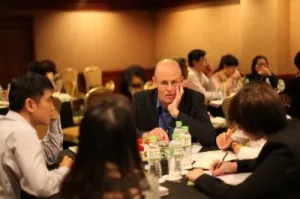
Dr. Marcel Cruel at the forum

There are 4 consultants from SPIN project attending the forum, including: Dr. Marcel Cruel (Delft University of Technology), Mr. Nguyen Hong Long – representing GreenChoice company, Mr. Tran Duy Long – representing VietLien Group and Mr. Doan Minh Quang – reprensenting I-Nature Knowledge Farm. The spearker held palarell roundtable discussions on 3 sub-sectors mentioned in Vietnam enterprises to find a new creative way to cut down food waste in Vietnam in particular and worldwide. At these discussions, speakers and representatives of enterprises, government and NGOs in Vietnam and other countries sat down to share their difficulties, exchange knowledge and lesson learned to improve the situation in their own countries.

11

Mr. Tran Duy Long – representing Viet Lien Group – share food packaking and preserving

111

Mr. Doan Minh Quang – representing I-Nature – present food processing

 The forum was organized to address an urgent and practical global issue – food. According to Food Agriculture Organization (FAO), food waste has occupied up to 1/3 of the amount of food produced for human demands, which causes 750 millions USD losses every year. Resources have become exhausted, world population has increased and global warming has caused negative impacts; all of these factors will exacerbate current market conditions regarding the balance of supply and demand.

Despite the fact that the amount of food produced all over the world has exceeded world population’s demand in 2013, approximately one million people are suffering from starving and two million people have malnutrition.

Food manufacturers of locals, regions and worldwide now have the opportunity to adjust their strategies and turn market challenges into opportunities by eco-innovation and creative methods to access to new market segments, improve technical capacity and profitability for businesses.

The EcoAP 15th Forum is co-organized by United Nations Environment Program (UNEP) and European Commision in collaboration with Ministry of Agriculture and Rural Development and Vietnam Chamber of Commerce and Industry.

News available at http://scp.vn, November 2013

Press release of the workshop “Product Innovation – Key to Sustainable Future”
anh 4-Dong Gia

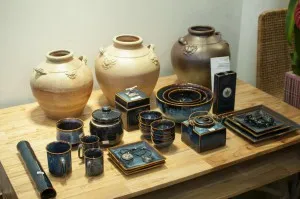
Sustainable products have been collected and displayed in Green Street, located at 45 Bat Su, Ha Noi

Project Sustainable Products Innovation (SPIN) organize a workshop on “Product Innovation – Key for Sustainable Future” with the aim to report the project’s achievements and share its experiences in product innovation in the four-year implementation in Vietnam, Laos and Cambodia. The workshop would provide a comprehensive overview of product innovation practice and the prospects towards sustainability in Vietnam in particular and in Southeast Asia in general.

PRESS RELEASE

WORKSHOP

“PRODUCT INNOVATION – KEY TO SUSTAINABLE FUTURE”

HA NOI November 14th 2013 – Project Sustainable Products Innovation (SPIN) organize a workshop on “Product Innovation – Key for Sustainable Future” with the aim to report the project’s achievements and share its experiences in product innovation in the four-year implementation in Vietnam, Laos and Cambodia. The workshop would provide a comprehensive overview of product innovation practice and the prospects towards sustainability in Vietnam in particular and in Southeast Asia in general. 

SPIN has worked with more than 500 small and medium entrepreneurs in 4 sectors, namely Textile, Furniture, Handicraft and Packaging; supported them to innovate products at the link: Product design (Re-design and New-design), Product strategy, Clean technology consultancy and transfer. As a result, under the tight collaboration between these companies and SPIN’s experts and designers, 2000 products have been re-designed and new-designed to be friendly to the environment, non-poisoned to human’s health, specially, potential to be massively launched to the market.

Based on the methodology of Clean technology and Efficient Natural resources Use, 85 Laos companies have innovated their products in design and 85 Cambodia companies have focus on inside-innovation. In Vietnam, the process of product innovation has not been limited in the sphere of a company but expanded to form a value chain of companies who operate in the same sectors to support each other in production. In Laos and Cambodia, the companies have been oriented to be adaptive to changing environment, in parallel; Vietnam companies have an active access based on transferred technologies which are clustered and developed by SPIN to be suitable for specific contexts of companies and the natural conditions of Vietnam.

This model and innovative business practices would help entrepreneurs enhance their competitiveness and social responsibility as well as environmental friendliness of products.

Entrepreneurs who involve in SPIN project have been raised their awareness and capacity of product innovation and production towards sustainability. Regarding this, Mr. Nguyen Hong Long, Regional Coordinator of SPIN project, shares: “Through SPIN’s workshops and training courses, most of companies have comprehended that it would be not too difficult to innovate their products and still ensure their competitiveness. These companies have been motivated to take action in product innovation with knowledge equipped and technologies transferred in order to use efficiently natural resources and utilize the waste to create the input materials for production.

More than 30 sustainable technologies have been developed, utilized and clustered into smaller groups to be applied in specific contexts of business and natural conditions of Vietnam. In details, there are three most successful applied groups which are Renewable Energy, Renewable Materials and Zero-waste Knowledge Farm. The group of renewable energy includes solar energy and gasifier for residents and industry which are applied in companies producing mushroom, bamboo products such as Ngoc Dong, Hiep Hoa…The group of renewable materials has been implemented in producing furniture, green composite pots, coiling bamboo products…

Specially, the model of zero-waste knowledge farming named I-Nature embodies 25 sustainable technologies to create circle processes to keep the balance of the environment for the growth of plants and cattle. This model has been developed from traditional agricultural model with applied new technologies, resulting in zero-waste organic farming which causing no harm to environment and human’s health. Now, the model has been deployed at 10 households in Ba Vi and Soc Son, which contributes to their income.

According to Mr. Nguyen Hong Long, SPIN has created groups of sustainable technologies and a community of entrepreneurs with strong commitment to sustainable development, which would be the foundation for sustainable future in Vietnam.

At the workshop, Dr. Marcel Crul, Delft University of Technology, Netherlands, presents the methodology of product innovation used in SPIN project and the typical case study in Vietnam. Ms. Nguyen Thi Bich Hoa, Vice-director of Asian Institute of Technology Center in Vietnam, shares about Building product innovation capacity for entrepreneurs in Vietnam. As a result, Sustainable products have been collected and displayed in Green Street, located at 45 Bat Su, which was official open in September 2013.

Available at http://scp.vn

World Bank funds Vietnam’s largest wastewater treatment plant in HCMC
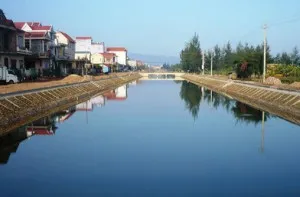
The government has approved a World Bank-funded project to build the country’s largest wastewater treatment plant in Ho Chi Minh City.

vn-phongthuycanal

Source: worldbank.org

The US$524 million project is in fact part of the second phase of the HCMC Environmental Sanitation Project, which began in 2001. The bank will provide $450 million and the rest will come from the city. Work will begin next year on the sewage treatment plant with a capacity of 480,000 cubic meters per day .

Also to be built is an integrated sewer system to collect sewage from District 2 and the Nhieu Loc-Thi Nghe Canal Basin in Districts 1,3, 10, Phu Nhuan, Tan Binh, Binh Thanh and Go Vap, and take it to the plant for treatment instead of being dumped into the Saigon River.  The work is expected to finish in 2019.

 The HCMC Environmental Sanitation Project, which included dredging of the Nhieu Loc-Thi Nghe Canal, finally finished last year after much delay.

Source: thanhniennews.com

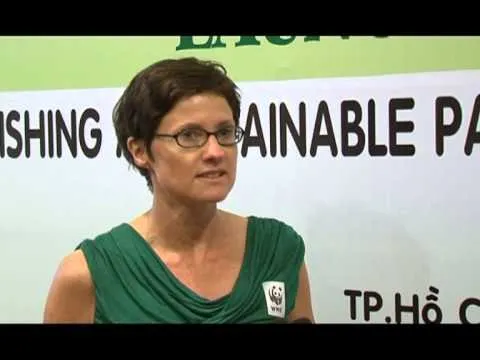
WWF about Establishing a Suitanable Pangasius Supply chain in Vietnam – SUPA

Ms Sabine Gisch – Boie, Project Leader of International Program, WWF Austria, emphasized the importance of quality and food safety in Establishing a sustainable Pangasius supply chain in Vietnam