Transitioning towards eco-industrial parks: Are enterprises required to implement RECP solutions?
In the transition towards the eco-industrial park (EIP) model, Resource Efficient and Cleaner Production (RECP) is one of the key approaches that helps enterprises identify opportunities to save raw materials, energy, water and chemicals, while reducing waste, emissions and production costs.
In the previous article in the “Transitioning towards eco-industrial parks” series, VNCPC shared the benefits that enterprises can gain from participating in an RECP assessment.
However, another issue that many enterprises are concerned about is: After experts propose technical solutions, are enterprises required to implement them? What happens if a solution is not yet suitable for the enterprise’s investment capacity or production plan?
This is also one of the questions frequently raised by enterprises during discussions with the project team.
Question
When participating in the project, are enterprises required to implement the proposed technical solutions? How much flexibility and decision-making authority do enterprises have in selecting and implementing the solutions?
VNCPC Expert’s Answer
Enterprises are not required to implement the technical solutions proposed following the RECP assessment.
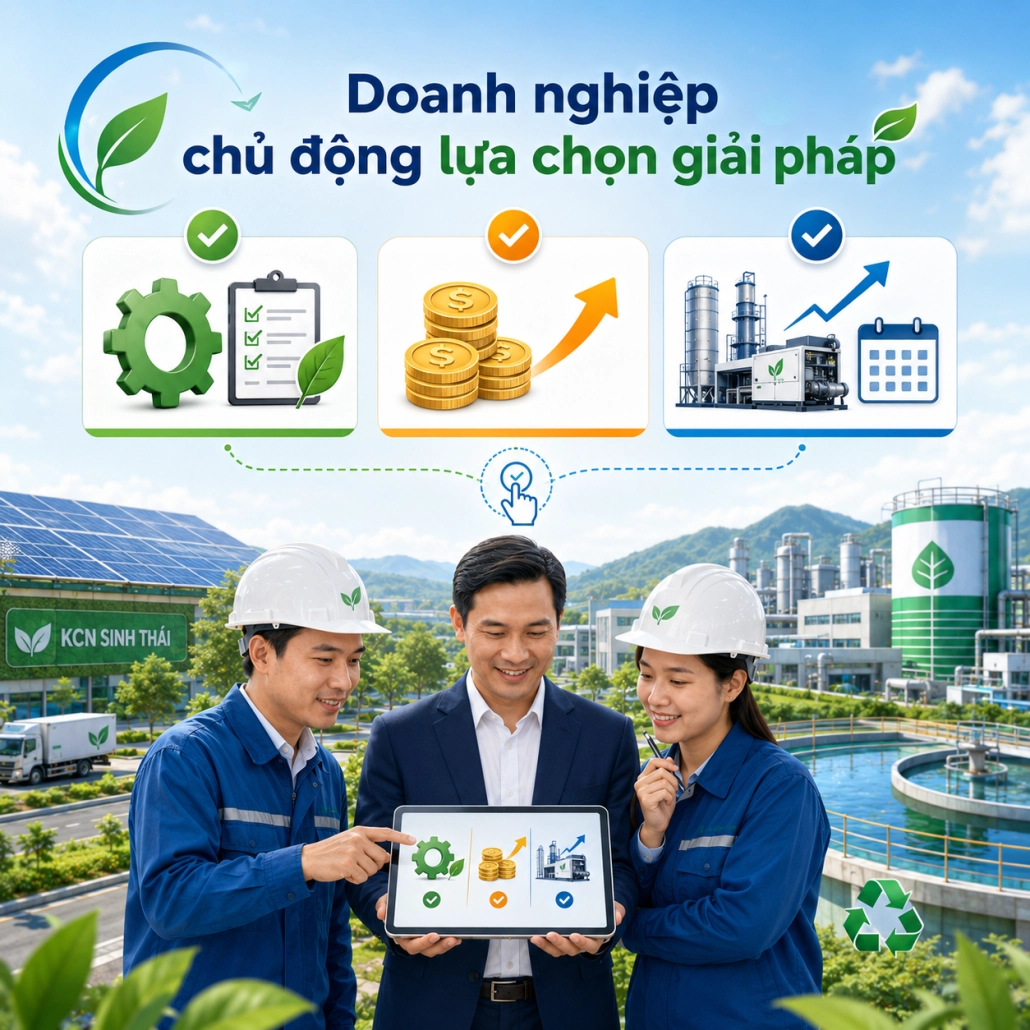
The purpose of the assessment is to help enterprises identify potential improvement opportunities, analyze their applicability and provide additional technical information to support informed decision-making.
Which solutions are selected, when they are implemented and at what scale are entirely subject to the decision and actual conditions of each enterprise.
In other words, experts play the role of assessment – analysis – recommendation – support, while the enterprise remains the final decision-maker.
Not all RECP solutions require significant investment
One important feature of the RECP approach is that solutions are developed based on the enterprise’s actual conditions and can range from very simple improvements in management and operation to investments in equipment and technology.
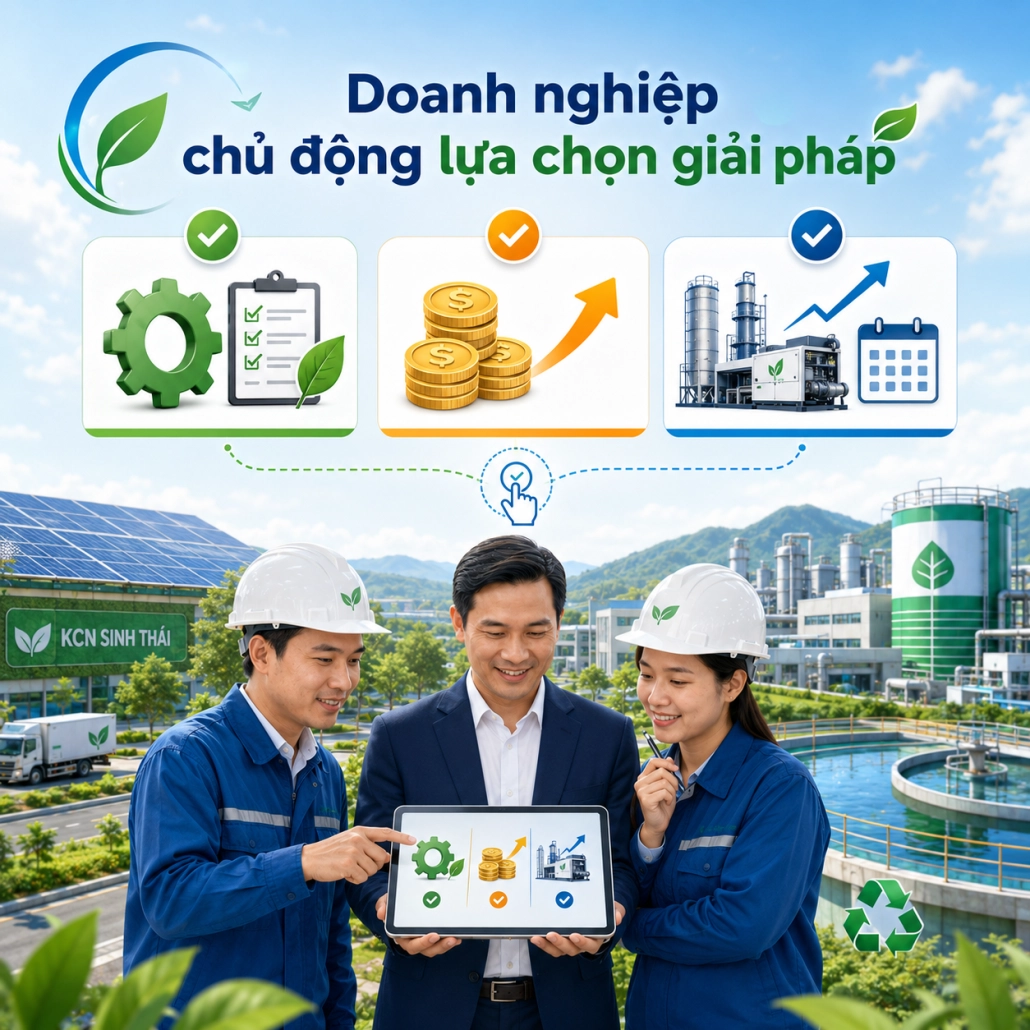
In general, the solutions can be divided into three groups:
- Good housekeeping solutions requiring little or no investment: such as adjusting operating practices, strengthening monitoring and control, improving equipment maintenance, preventing leaks and resource losses, or improving production practices.
- Low-investment solutions with short payback periods: enterprises need to make a certain level of investment, but these solutions can generate relatively quick savings.
- Medium- to high-investment solutions providing long-term benefits: these often involve upgrading or replacing equipment, production lines or technologies and therefore require careful consideration of financing, payback periods and production plans.
Having different categories of solutions means enterprises do not have to choose between “implementing everything or implementing nothing”. Instead, enterprises can start with opportunities that are easier to implement, require little investment and deliver clear benefits, before gradually considering larger investment options.
Enterprises proactively select suitable solutions
Following the survey and assessment, the enterprise will receive a list of RECP opportunities identified and proposed by the experts.
Based on this list, the enterprise can assess each solution according to important factors such as investment requirements, potential savings, payback period, technical conditions, human resources and production and business plans.
A solution being technically feasible does not mean that the enterprise must implement it immediately. For example, replacing a piece of equipment may offer significant energy savings, but the enterprise may already have plans to expand the factory within the next few years. In such a case, the enterprise can choose a more appropriate time for the investment.
Conversely, simple measures such as improving operating practices, controlling losses or optimizing production parameters may be prioritized for early implementation if the enterprise finds them effective and they require limited resources.
RECP is therefore not a list of requirements that enterprises must comply with, but rather a tool that provides enterprises with an additional basis for making appropriate improvement decisions.
From technical recommendations to practical improvements
Based on practical implementation experience, enterprises are often able to implement approximately 50% of the proposed solutions. In particular, most low-cost solutions that deliver high benefits are commonly prioritized for early implementation and subsequently maintained as part of regular management and operational practices.
This figure also highlights an important point: the value of an RECP assessment does not lie in requiring enterprises to implement every recommendation, but in helping them identify the opportunities that are most suitable for their specific conditions.
Some enterprises may begin with a few good housekeeping measures. Others may decide to invest immediately in an energy-saving solution with an attractive payback period. Some solutions may need to be incorporated into medium- or long-term investment plans.
What matters is that the enterprise gains a portfolio of technically assessed improvement opportunities, allowing it to proactively develop an appropriate implementation roadmap.
RECP – step-by-step improvement rather than additional pressure on enterprises
Green transition or the transition towards an eco-enterprise model does not necessarily have to begin with large investment projects.
In many cases, the process can start with small changes: improving control of a material flow, reducing a point of energy loss, improving equipment operation or reusing a resource stream that is currently being wasted.
Once suitable solutions are implemented and their effectiveness is demonstrated, enterprises can continue to expand towards larger opportunities.
This is also the core spirit of RECP: enterprises proactively select – implement step by step – measure results – continue improving.
Through this approach, an RECP assessment does not create an additional obligation for enterprises, but rather provides information, solutions and technical evidence to help enterprises make more effective investment decisions.
Each appropriate solution that is implemented not only helps the enterprise save resources and reduce costs, but also contributes step by step to the development of eco-enterprises and eco-industrial parks in the future.
Continue following VNCPC’s “Transitioning towards eco-industrial parks” series to explore practical questions raised by enterprises during RECP assessments and their transition towards more sustainable production models.
VNCPC